NAIROBI, Kenya - May has emerged as the deadliest month of 2026 so far for police-related killings in Kenya, with 24 people losing their lives at the hands of law enforcement officers, according to data compiled by the Missing Voices Coalition.
The figure accounts for nearly half of all police killings recorded in the country this year and marks a sharp escalation in the use of force during a period characterized by widespread public demonstrations and growing economic discontent.
The deaths occurred amid nationwide protests against fuel price increases, reigniting concerns about police accountability and the manner in which security agencies manage public assemblies.
Data collected by the coalition shows that 49 people were killed by police between January and May 2026. While the number of fatalities had been rising steadily throughout the year, May witnessed an unprecedented surge.
Four people were killed in January, six in February, six in March and nine in April. The trend took a dramatic turn in May when 24 deaths were recorded.
According to the Missing Voices Coalition, the figures point to an increasingly aggressive approach to law enforcement and highlight the urgent need for reforms in public order policing.
Protest Policing Drives Fatalities
A closer examination of the data reveals that public demonstrations were at the centre of the deadly month.
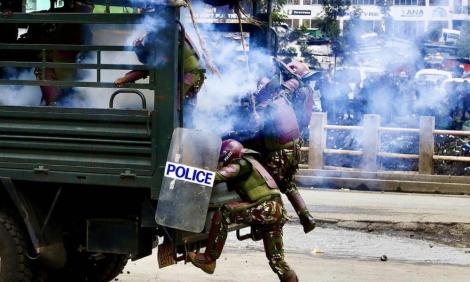
21 of the 24 deaths recorded in May occurred during police operations linked to protests. 19 people were killed during anti-fuel hike demonstrations held on May 18 and 19, while two others died during an earlier protest by boda boda riders who were demonstrating against alleged police harassment.
The statistics suggest that crowd-control operations have become the leading source of police-related fatalities in Kenya this year.
The deaths were spread across seven counties, underscoring the national reach of both the protests and the police response.
Kiambu recorded the highest number of fatalities with seven deaths, followed by Nairobi with six and Nakuru with four. Busia registered three deaths, while Vihiga, Nyeri and Kakamega recorded two, one and one death respectively.
The geographical spread of the killings points to systemic concerns rather than isolated incidents, raising questions about operational practices employed during the policing of demonstrations.
Comprehensive Data on Police Killings in 2026: https://missingvoices.or.ke/statistics?page=0
Constitutional Rights and Use of Force
The fatalities have renewed debate over the protection of constitutional freedoms, particularly the right to peaceful assembly.
Article 37 of the Constitution guarantees every person the right to assemble, demonstrate, picket and present petitions to public authorities peacefully and unarmed. The provision is widely regarded as a cornerstone of democratic participation, allowing citizens to express grievances and hold public institutions accountable.
While police have a legitimate duty to maintain public order and protect lives and property, both Kenyan law and international human rights standards require that any use of force be lawful, necessary and proportionate.
Against this backdrop, the deaths of 21 people during demonstrations in a single month have intensified scrutiny of police conduct and raised fundamental questions about whether established standards governing public order management are being observed.
Human rights advocates argue that the figures highlight a widening gap between constitutional guarantees and the realities experienced by citizens exercising their right to protest.
Deaths in Custody Persist
Beyond fatalities linked to demonstrations, the Missing Voices Coalition documented three deaths in police custody in May. In April, one other person died while in Police custody bringing the total number of people who have died while in police custody in 2026 to four.
Deaths occurring in detention remain among the gravest human rights concerns because individuals in custody are entirely under the care and control of the state.
Also, in 2026, the Missing Voices Coalition recorded three cases of enforced disappearances.
The Missing Voices Coalition continues to call for thorough, transparent and independent investigations into every custodial death to establish the circumstances involved and determine whether criminal or disciplinary liability exists.
The continued occurrence of such deaths has also raised concerns about detention conditions, oversight mechanisms and accountability within law enforcement institutions.
Calls for Reform
The events of May have intensified demands for comprehensive reforms to Kenya's public order policing framework.
Governance experts and human rights defenders argue that police responses to demonstrations should prioritize de-escalation, dialogue and the facilitation of peaceful assemblies rather than the use of force. They maintain that the protection of life must remain at the centre of all crowd-management operations.
The Missing Voices coalition is also calling for stronger oversight mechanisms to ensure that every death resulting from police action is independently investigated and that affected families have access to justice.
As economic pressures continue to fuel public dissatisfaction and demonstrations across the country, the conduct of law enforcement agencies is likely to remain under close public scrutiny.
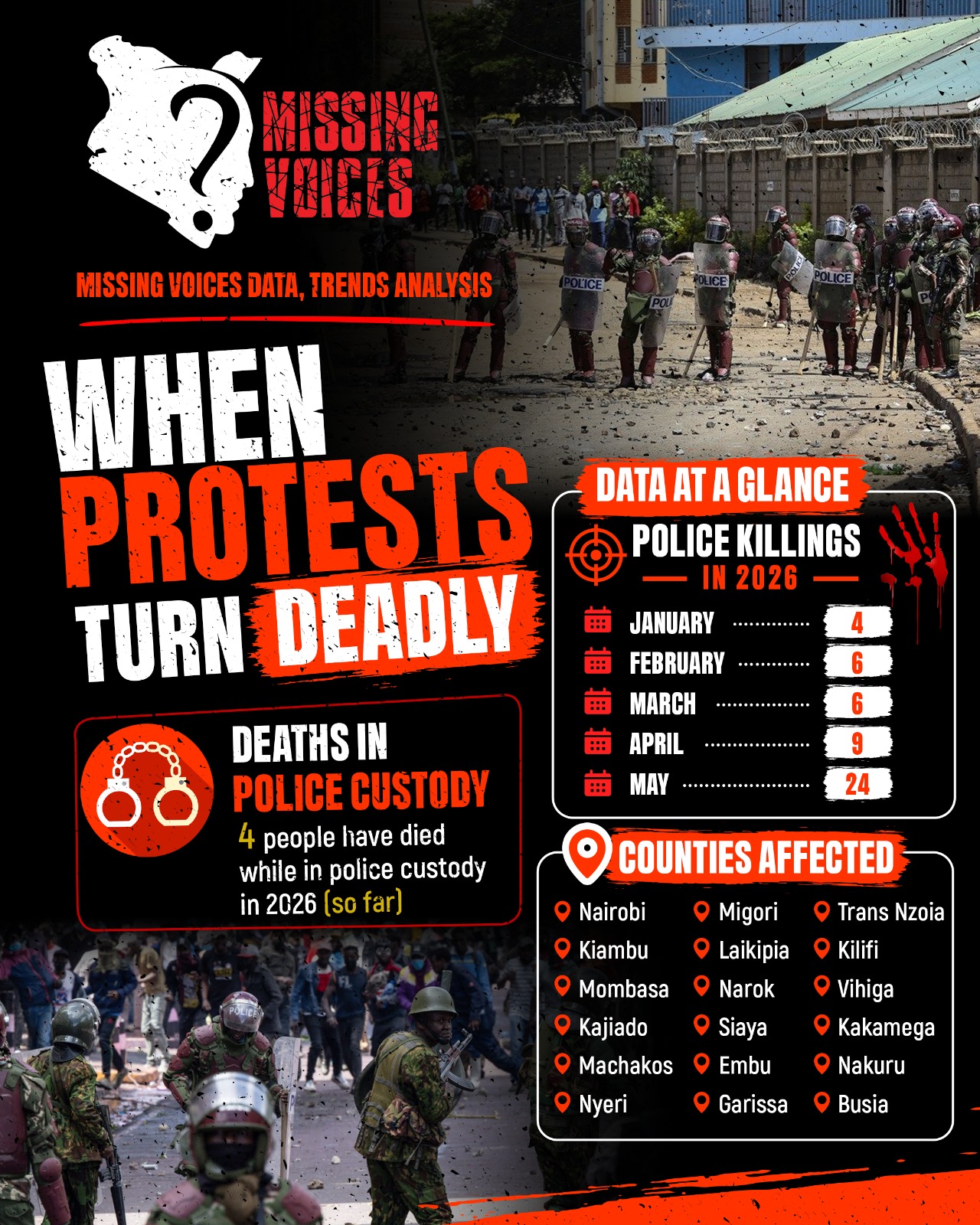
Data at a Glance
Police Killings in 2026 so Far
January - 4 February - 6
March - 6 April - 9
May - 24
Enforced Disappearances in 2026 so Far
3 Cases of Enforced Disappearances
Custodial Deaths
4 Deaths occurred in Police Custody
Counties Affected
Nairobi Kiambu Mombasa
Kajiado Machakos Nyeri
Migori Laikipia Narok
Siaya Embu Garissa
Trans Nzoia Kilifi Vihiga
Kakamega Nakuru Busia