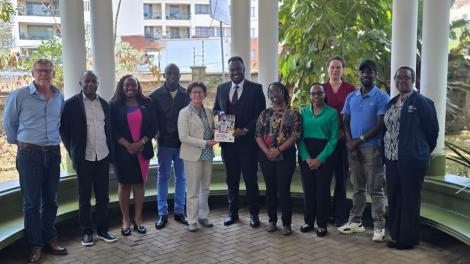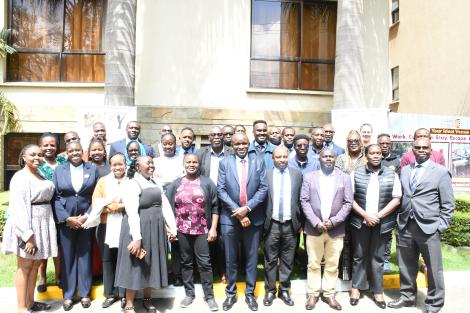
MOMBASA, Kenya - As Kenya looks ahead to the 2027 General Elections, journalists are preparing to navigate an increasingly complex environment shaped by political tensions, policing challenges, digital threats and risks to human rights. Against this backdrop, the Missing Voices Coalition convened its Annual Journalists’ Training on Elections, Policing and Accountability, bringing together journalists to strengthen their capacity to investigate and report on enforced disappearances, extrajudicial killings and other election-related human rights violations.
The training was designed around a central question: How can journalism contribute to early warning, accountability and the protection of human rights while keeping journalists and their sources safe?
With Kenya’s past electoral cycles providing important lessons, the training equipped journalists with practical knowledge and tools to recognise warning signs, document violations, protect vulnerable sources and pursue stories that can contribute to accountability.
A key component of the training focused on universal jurisdiction and command responsibility as pathways to accountability for grievous atrocities.
Journalists examined how accountability for extrajudicial killings and enforced disappearances can extend beyond the individuals who directly commit an act. The discussions explored the responsibility of senior commanders and state officials for crimes committed by people under their command, including the importance of establishing chains of command and patterns of abuse.
The session also introduced universal jurisdiction as a potential avenue for pursuing justice beyond national borders where domestic accountability mechanisms fail.
For journalists, understanding these concepts is particularly important. Investigative reporting can help connect individual incidents to broader patterns by documenting evidence, identifying decision-makers and tracing relationships between perpetrators and those exercising authority over them.
The objective was therefore not simply to help journalists report what happened, but to ask who knew, who authorised, who commanded, who failed to act and who can ultimately be held accountable?
Another critical area of focus was policing elections in Kenya and the lessons and risks ahead of 2027.
Participants examined historical trends in election security, the role of the police during previous electoral cycles and the experiences emerging from recent protests. The discussions emphasised the importance of recognising early warning indicators of violence and human rights violations before they escalate.
Journalists occupy a unique position in this space. Through responsible reporting, they can help identify emerging tensions, challenge misinformation, provide citizens with verified information and draw attention to violations before they become widespread.
The training encouraged journalists to view their work not only as documenting events after they occur, but also as contributing to early warning, public awareness and accountability.
The training also strengthened journalists’ understanding of the legal standards governing police use of force, crowd management and public assemblies.
Participants examined the distinction between lawful policing and abuse, alongside Kenya’s national accountability frameworks and relevant international standards.
This knowledge is particularly important when covering demonstrations, political gatherings and other public assemblies, where journalists may encounter situations involving excessive or unlawful use of force.
Understanding the law enables journalists to ask better questions, scrutinise official accounts and accurately assess whether actions taken by security agencies comply with established standards.
The training further examined a range of human rights violations that can occur in an election environment, including enforced disappearances, extrajudicial executions, arbitrary arrests, torture, excessive use of force, restrictions on assemblies and politically motivated violence involving hired groups or “goonish” dynamics.
Participants explored the definitions, patterns, warning signs and consequences of these violations.
The focus was particularly relevant as journalists prepare to cover the political environment leading to 2027. Recognising patterns early can help media practitioners move beyond isolated incidents and investigate whether seemingly unrelated events form part of a wider trend.
As journalism increasingly depends on digital platforms and electronic communication, the training also addressed data protection and digital rights.
 Journalists discussed how to handle sensitive information belonging to victims, survivors and families; maintain confidentiality; manage information sharing; and understand the risks posed by surveillance, online harassment and internet disruptions.
The session introduced key considerations under Kenya’s data protection framework, emphasising that responsible journalism must balance the public interest with the privacy, dignity and safety of those whose stories are being told.
The safety of journalists themselves was another central theme.
Through sessions on digital security, participants examined threats such as hacking, surveillance, phishing, device confiscation and compromised accounts. The discussions emphasised practical measures for protecting sources, sensitive information, devices and digital accounts.
The training also covered physical security, including situational awareness, surveillance and counter-surveillance.
These skills are increasingly important for journalists working on sensitive investigations, particularly when reporting on powerful actors, security agencies, political violence and human rights violations.
Documenting Crime Scenes and Preserving Evidence
Journalists covering killings, shootings, torture and other violations can encounter crime scenes before investigations are complete. A dedicated session on crime scene management and evidence preservation therefore focused on the basic principles of preserving crime scenes and avoiding contamination.
Participants examined the respective roles of police officers, forensic personnel and pathologists, while also developing practical approaches for documenting crime scenes.
The session reinforced the importance of accurate documentation, including recording what is observed without interfering with potential evidence.
For investigative journalists, such documentation can become an important component of establishing facts and corroborating accounts.
The training also placed significant emphasis on trauma-informed reporting.
Participants explored informed consent, protecting survivors, interviewing victims and families, and avoiding retraumatisation. Particular attention was given to safeguarding vulnerable sources and ensuring that the pursuit of a compelling story does not come at the expense of a victim’s dignity or wellbeing.
This approach recognises that behind every statistic is a person, a family and a community living with the consequences of violence and loss.
Victim-centred journalism therefore requires journalists to ask not only what information can be obtained, but also how it can be obtained responsibly and safely.
The training concluded with a focus on wellbeing and protecting the messenger.
Journalists covering conflict, violence, death, disappearances and traumatic events can experience burnout, secondary trauma and digital fatigue. The wellbeing session created space for participants to recognise warning signs, explore coping mechanisms and appreciate the importance of mental health and team support.
The message was clear, journalists cannot effectively protect the public if they are unable to protect themselves.
The Missing Voices Coalition’s Annual Journalists’ Training comes at a critical time as Kenya approaches another election cycle.
The training went beyond conventional journalism skills. It sought to strengthen journalists as watchdogs, investigators, storytellers and accountability actors capable of documenting violations while navigating the risks associated with their work.
From understanding command responsibility and universal jurisdiction to recognising early warning signs, documenting crime scenes, protecting digital information and practising trauma-informed reporting, the sessions provided journalists with tools to produce stronger, safer and more responsible journalism.
As the country moves towards 2027, the role of the media will be crucial in ensuring that human rights violations do not disappear from public attention. Through accurate documentation, responsible reporting and persistent investigations, journalists can help ensure that victims are heard, evidence is preserved and those responsible for abuses are not shielded from accountability.
Strengthening journalism is therefore not only about improving the quality of news. It is about strengthening the systems through which society sees, understands and responds to violations of human rights.