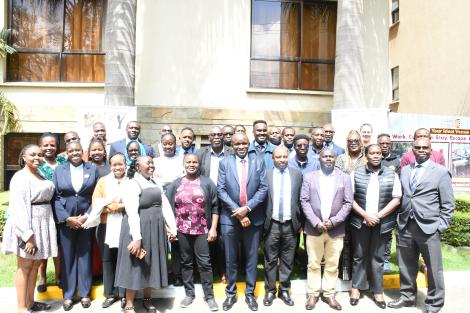
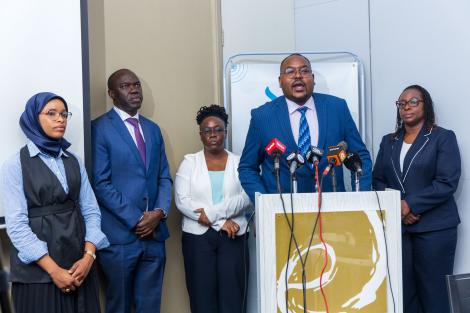
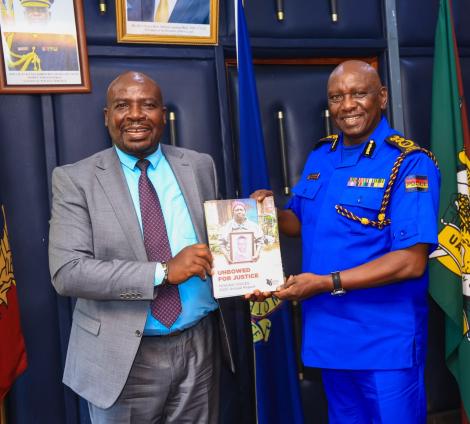
NAIROBI, Kenya - Missing Voices recently convened a national Town Hall discussion on Citizen TV to mark the Day of Delayed Justice, bringing together key stakeholders to examine the persistent barriers that prevent victims and their families from accessing timely justice.
The Day of Delayed Justice is observed annually on June 23 in memory of lawyer Willie Kimani, his client Josephat Mwenda, and their driver Joseph Muiruri, collectively known as the Mavoko Three. The three disappeared on June 23, 2016, and were later found murdered. Their case became a symbol of the fight against police abuse of power, enforced disappearances, and extrajudicial killings in Kenya.
For years, civil society organizations, legal practitioners, community justice advocates, faith-based groups, the media, and members of the public campaigned for accountability in the case. These efforts culminated in the conviction and sentencing of three police officers and one civilian in 2023. The case demonstrated that justice is possible, even when delayed, but also highlighted the systemic challenges that victims and families continue to face.
The Town Hall discussion focused on the urgent reforms needed to strengthen accountability and ensure justice is accessible to all Kenyans. Participants explored the legal and institutional gaps that continue to undermine investigations, prosecutions, and support for victims of human rights violations.
Watch the Full Townhall: https://www.youtube.com/watch?v=NzpJ26uysZw
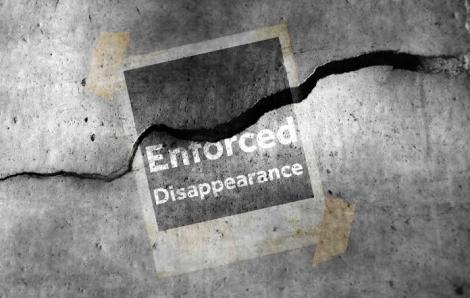
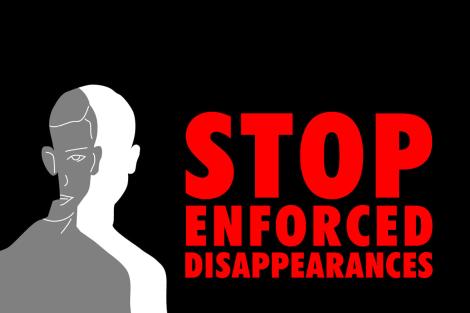
A key issue discussed was the absence of a standalone law criminalizing enforced disappearance in Kenya. Although Kenya signed the International Convention for the Protection of All Persons from Enforced Disappearance (ICCPED) in 2007, the country has yet to ratify and domesticate the convention. As a result, cases of enforced disappearance are prosecuted using fragmented legal provisions, making investigations and prosecutions more difficult and often denying families the truth, justice, and reparations they deserve.
Stakeholders noted that the lack of a specific offence for enforced disappearance weakens accountability mechanisms and fails to adequately address command responsibility in cases involving police abuses.
Participants emphasized that accountability must extend beyond individual perpetrators to include commanders and senior officers who order, enable, condone, or fail to prevent unlawful actions by officers under their authority. The discussion highlighted the need for stronger legal frameworks that ensure responsibility is assigned throughout the chain of command in cases of extrajudicial killings and enforced disappearances.
The Town Hall also highlighted the urgent need to operationalize the Coroners Service Act, a critical law intended to strengthen independent investigations into suspicious, violent, and unexplained deaths. Participants observed that delays in operationalizing the Act have limited the country's ability to conduct timely, impartial, and professional death investigations, particularly in cases involving alleged police misconduct.
Effective implementation of the Act was identified as a key step towards improving accountability, preserving evidence, and ensuring families receive credible answers regarding the deaths of their loved ones.
In addition, participants discussed the need for the full operationalization of the Victim Protection Act, 2014. While the law was enacted to place victims at the centre of the criminal justice process, many of its protections remain inaccessible in practice. Survivors and families affected by police abuse, enforced disappearances, and extrajudicial killings often navigate lengthy legal processes without adequate psychosocial support, legal assistance, or financial resources.
Participants emphasized that a victim-centred justice system requires more than convictions. It demands meaningful support structures that protect victims' rights, amplify their voices, and ensure their dignity throughout the justice process.
The Town Hall further underscored the importance of sustained collaboration among criminal justice actors, government institutions, civil society organizations, and affected communities. Strengthening these partnerships is essential to addressing systemic barriers and building a justice system that is responsive, accountable, and accessible.
As Kenya commemorates the Day of Delayed Justice, Missing Voices continues to advocate for reforms that advance accountability for police abuses, end enforced disappearances and extrajudicial killings, and place survivors and victims' families at the centre of justice efforts.
The coalition remains committed to working with stakeholders to push for the ratification and domestication of the ICCPED, the criminalization of enforced disappearance as a standalone offence, the operationalization of the Coroners Service Act and the Victim Protection Act, and broader reforms that ensure no victim is denied justice because of delays, institutional failures, or abuse of power.